
Heating. Cooling. Indoor Air Quality
Real Estate HVAC Inspection in Sacramento, CA
When a general home inspector evaluates a Sacramento property, they will turn on the furnace, confirm air comes out of the vents, and note the approximate age of the system. That is it. They are not HVAC specialists, and they are not expected to be. What they will not catch is a cracked heat exchanger, low refrigerant from a slow leak, a capacitor that is weeks away from failing, ductwork that is losing 25% of conditioned air into the attic, or a system that is significantly oversized for the home it is in. Those problems stay hidden until after closing when they become your problem and your repair bill. Crown Heating & Air provides dedicated HVAC inspections for Sacramento home buyers and sellers, performed by a technician with over 25 years of experience and delivered with a written report you can use at the negotiating table or to prepare your home for market.
Experience
REsponse
Honest
Pricing
100% Satisfaction
Guaranteed
What A General Home Inspector Cannot Tell You About The HVAC System
This is the most important thing Sacramento home buyers need to understand before they close on a property.
A licensed general home inspector performs a visual survey and basic performance check. For the HVAC system, that means turning the system on, verifying it produces heated or cooled air, and estimating its age based on the equipment label. California’s home inspection standards do not require inspectors to perform the kind of detailed technical evaluation that reveals what the system is actually worth and how much longer it will last.
Here is what a general inspection typically will not catch.
A cracked heat exchanger. This is the most serious safety issue in any gas furnace and it requires a trained eye and specific knowledge to identify. A cracked heat exchanger can allow carbon monoxide to enter the home’s living space. A general home inspector will note that the furnace turns on. They will not inspect the heat exchanger for cracks. Crown Heating & Air checks every heat exchanger on every inspection.
Low refrigerant from a slow leak. If the system is low on refrigerant, it will still run. It will still produce some cooling. It will just do both less efficiently, and within a season or two it will stop cooling adequately and require a repair that can run $400 to $1,500 depending on where the leak is. A basic inspection will not catch a system that is marginally low on refrigerant.
Failing electrical components. Capacitors, contactors, and other electrical components degrade over time and often give early warning signs that are only visible when a technician checks electrical draw against manufacturer specifications. A capacitor that reads low is weeks or months from failure. A general inspector will not catch it.
Ductwork problems. Leaking or disconnected ductwork can mean your new home is losing 20 to 30 percent of conditioned air into the attic before it ever reaches the living space. General inspectors rarely access attic ductwork in meaningful detail. If the vents produce air, the ductwork passes.
System age and remaining useful life. Knowing a system is 14 years old is not enough. The condition of the components, the quality of maintenance it has received, and what repairs it may need in the next two to three years are what actually matter for your budget. A trained technician can give you a realistic picture of what you are inheriting.
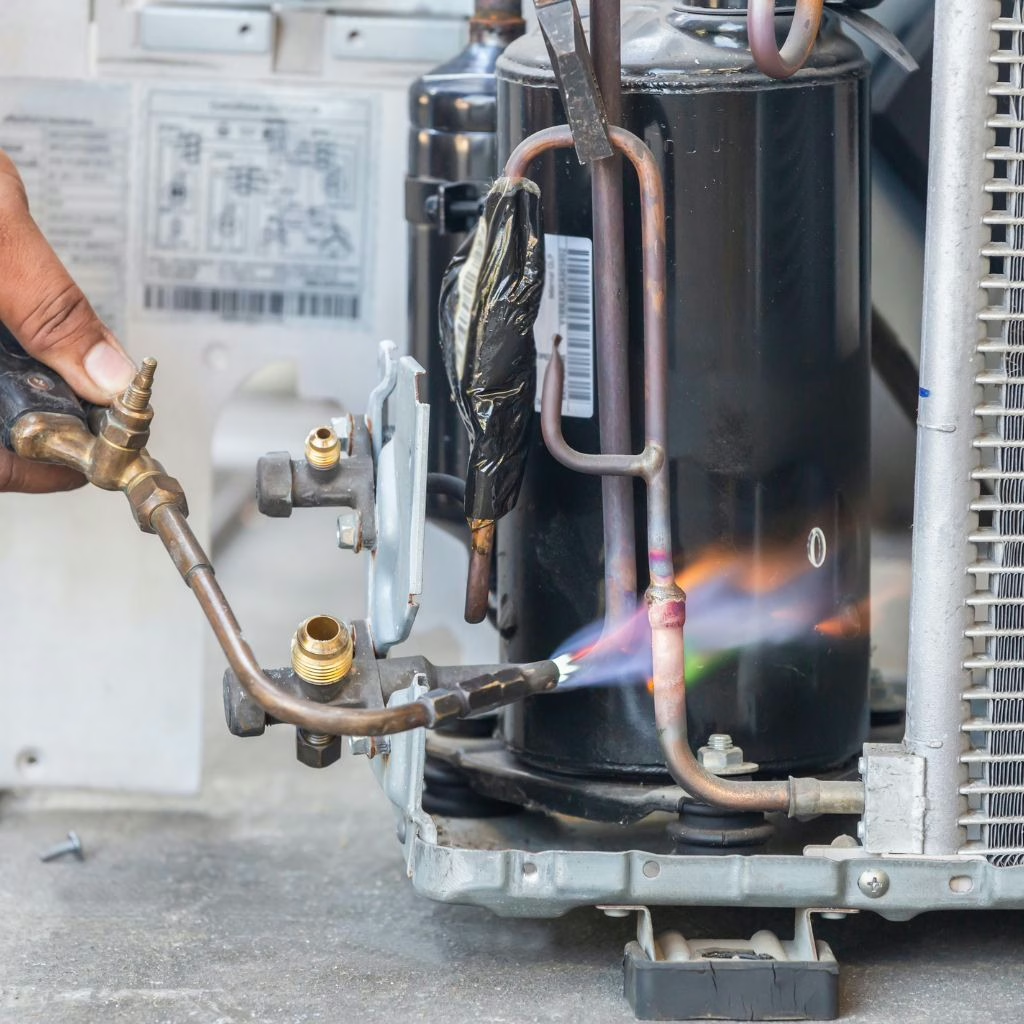
HVAC Inspections For Sacramento Home Buyers
You are about to make one of the largest purchases of your life. The HVAC system in the home you are buying is worth $6,000 to $14,000 to replace and has a direct impact on your comfort and your energy costs from day one. A dedicated HVAC inspection before you close gives you three things a general home inspection cannot.
An accurate picture of the system’s condition. Not just whether it turns on but how it is performing, what shape its components are in, and what repairs or replacements it is likely to need in the next few years.
Negotiating leverage. If the inspection reveals a system with a cracked heat exchanger, a refrigerant leak, or components near the end of their life, your real estate agent can use that information to negotiate repairs, a price reduction, or a credit at closing. A written report from a licensed HVAC technician carries weight in that conversation in a way a general inspector’s notes do not.
A plan for what comes next. Even if the system is in reasonable shape, knowing its age, condition, and likely remaining life helps you budget accurately for the years ahead. No surprises.
Sacramento’s housing stock includes a large number of older homes in neighborhoods like Land Park, East Sacramento, Midtown, Carmichael, and Citrus Heights where HVAC systems are often 15 to 20 years old or more. In these homes especially, a dedicated HVAC inspection is not a luxury. It is one of the smarter ways to protect your investment before the paperwork is signed.
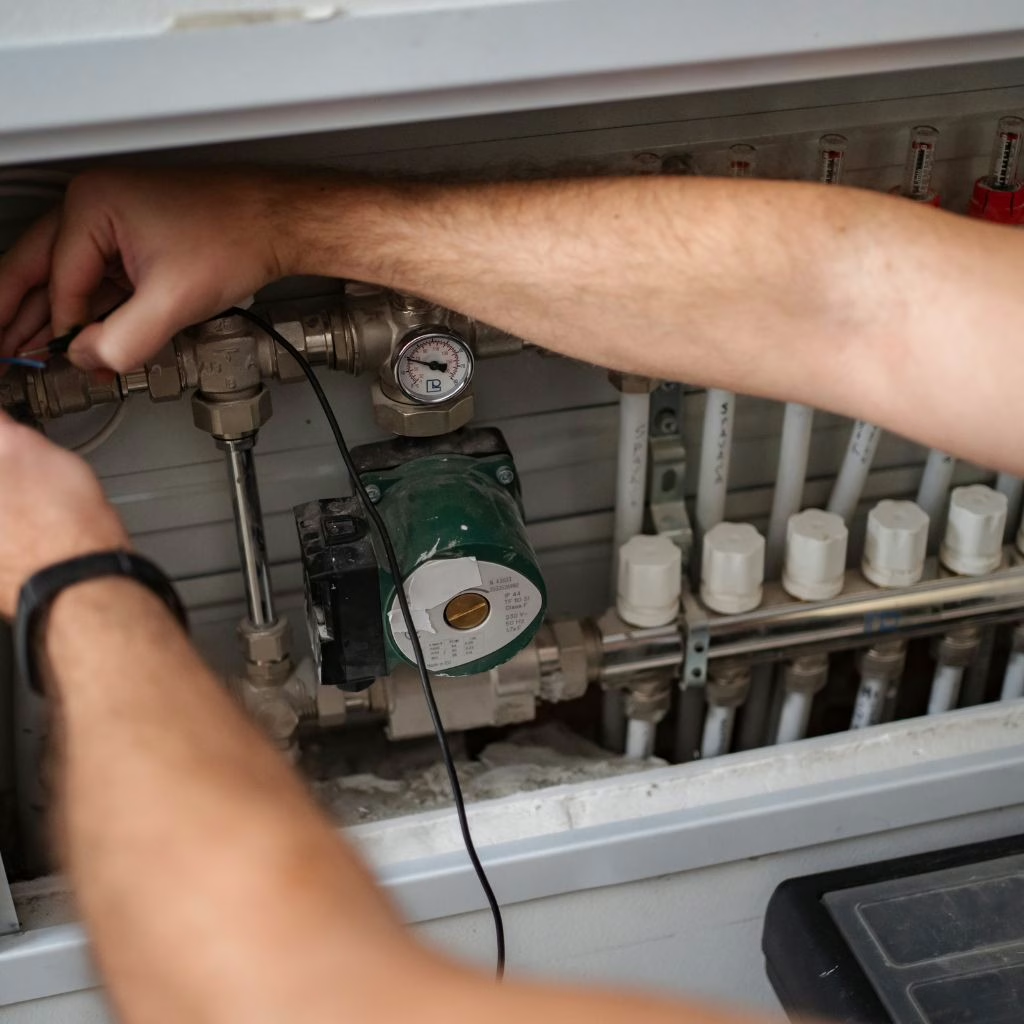
HVAC Inspections For Sacramento Home Sellers
A pre-listing HVAC inspection puts you in control of the conversation instead of reacting to it. Here is why that matters.
When a buyer’s inspector or HVAC technician finds a problem with your system during escrow, you lose negotiating position immediately. You are now responding to their findings under time pressure, often during a contingency period, with limited options. The buyer may ask for a repair credit, a price reduction, or in some cases walk away entirely.
A pre-listing inspection from Crown Heating & Air changes that dynamic. You find out what the system needs before your home goes on the market. If the issue is minor, you fix it and present a clean HVAC report to prospective buyers. If the issue is significant, you can factor it into your pricing strategy or address it on your own timeline rather than under escrow pressure. Either way, you go to market with information instead of uncertainty.
Sacramento’s real estate market moves quickly. Having documentation of a recently inspected and serviced HVAC system is a genuine selling point that separates your listing from comparable properties where buyers have no idea what they are inheriting.
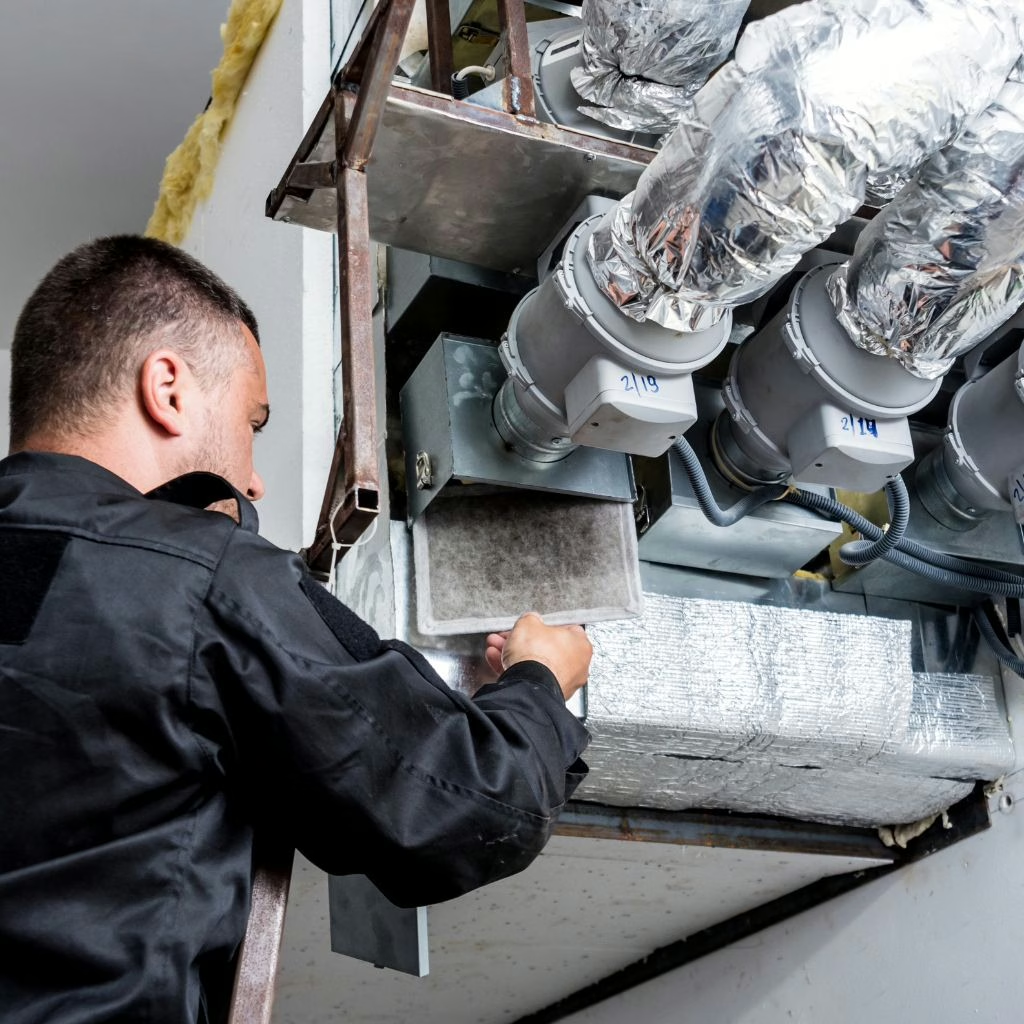
What Crown Heating & Air Covers During An HVAC Inspection
Every inspection includes a thorough evaluation of the complete heating and cooling system and concludes with a written report you can share with your real estate agent, the buyer, or the seller depending on which side of the transaction you are on.
For gas furnaces and heating systems: heat exchanger inspection for cracks, burner condition and combustion testing, ignitor and flame sensor condition, electrical components and wiring, blower motor and airflow, flue and venting integrity, thermostat calibration, and overall system performance and estimated remaining useful life.
For air conditioning and heat pump systems: refrigerant level and leak check, condenser and evaporator coil condition, capacitor and contactor testing, electrical draw against manufacturer specifications, airflow and temperature differential testing, and overall system performance and estimated remaining useful life.
For ductwork: visual inspection of accessible duct runs for disconnections, damage, and insulation condition, and airflow evaluation at registers to identify zones that are not receiving proper delivery.
The written report summarizes findings clearly, notes any safety concerns, identifies components that are approaching end of life, and gives you an honest assessment of what the system needs and when.
Wherever You Are. We Will Be.
HVAC Service Areas: Sacramento & Greater Metro
Crown Heating & Air serves homeowners throughout Sacramento County, Placer County, and El Dorado County. Same quality, same honest pricing, no matter where you are in the metro.
WE SERVE:
- And more throughout the greater Sacramento area
FAQ'S
How Much Does An HVAC Inspection Cost In Sacramento?
Most HVAC inspections in Sacramento run between $150 and $300 depending on the size and complexity of the system and whether the home has both a furnace and a separate air conditioning system or a combined heat pump. Crown Heating & Air provides upfront pricing when you call to schedule. Considering the cost of HVAC repairs or replacement, a dedicated inspection is one of the lower-cost protections available in any real estate transaction.
How Long Does An HVAC Inspection Take?
Most single-system inspections take one to two hours. Homes with both a separate furnace and air conditioning system, or with multiple zones, may take slightly longer. Crown Heating & Air will give you a clear time estimate when you schedule.
Can The Inspection Be Scheduled During The Contingency Period?
Yes. Crown Heating & Air responds to calls and texts within minutes and works to schedule inspections quickly. We understand that real estate transactions move on tight timelines and contingency windows are short. Let us know when you call that you are working within a contingency period and we will prioritize your scheduling accordingly.
Why Do I Need An HVAC Inspection If I Already Have A Home Inspector?
General home inspectors are not HVAC specialists. Their standard process is to turn the system on and confirm it runs. They are not checking refrigerant levels, inspecting heat exchangers for cracks, testing electrical component health, or evaluating ductwork integrity. A dedicated HVAC inspection by a licensed technician gives you a complete picture of the system’s condition that a general home inspection simply cannot provide.